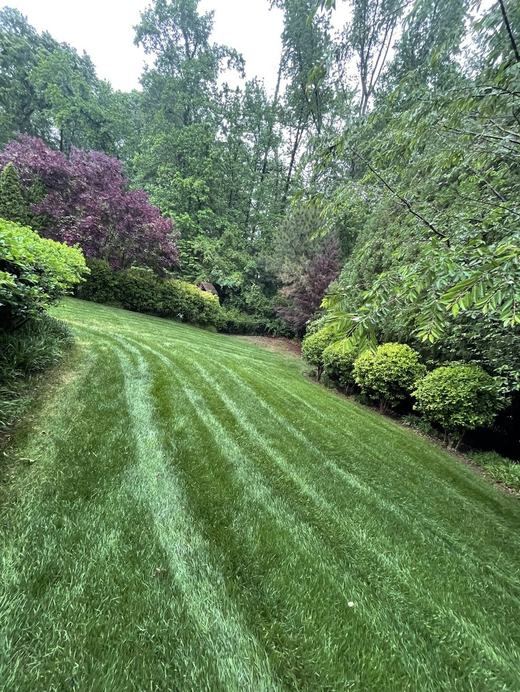
If you have a tall fescue lawn, and most homes in Apex and the Triangle do, fall is the season that matters most. Fescue is a cool-season grass. It struggles through the summer heat and does most of its real growing and recovering when temperatures drop in September and October. What you do now decides how your lawn looks next spring.
1. Aerate and overseed in September
Early fall is the best time of year to aerate and overseed fescue. The window runs roughly from late August to mid-October, and September is ideal. Soil is still warm, so seed sprouts quickly, and the cooler weather that follows gives young grass time to establish before winter and, more importantly, before next summer.
Core aeration pulls plugs of soil out of the lawn, which relieves compaction in our heavy clay and gives new seed a protected spot with good soil contact. Leave the plugs on the lawn. They break down on their own in a couple of weeks.
2. Water new seed the right way
New seed needs the top of the soil to stay moist until it sprouts. That usually means light watering once or twice a day for the first one to two weeks. Once the new grass is up and growing, switch to deeper, less frequent watering so roots grow down instead of staying near the surface.
3. Fertilize in fall, not summer
Fescue makes the best use of fertilizer in the fall. A common schedule for the Triangle is to feed in September and again in November. Avoid heavy fertilizing in late spring and summer, which pushes growth when fescue is most stressed and invites disease. A soil test, available through the NC Department of Agriculture, tells you exactly what your lawn needs.
4. Keep the leaves off
Our oaks, maples and sweetgums drop most of their leaves from late October into December, right when fescue is growing and new seed is trying to establish. A thick layer of wet leaves blocks sunlight and can smother grass in a few weeks. Clear leaves regularly through the fall instead of waiting for one big cleanup at the end.
5. Keep mowing
Fescue keeps growing well into the fall. Keep mowing at about 3 to 3.5 inches, and wait until new seedlings are a few inches tall before mowing them for the first time. Mowing over a light layer of leaves can also chop them up and help them break down.
Quick fall checklist
- September: core aerate and overseed
- September: first fall fertilizer application
- Through October: keep new seed moist, then water deeply
- October to December: clear leaves regularly
- November: second fertilizer application